
You get a message that says “asl?” and you freeze. What is ASL in text? In chat, it usually means age, sex, location. It is an old internet question people used to size up a stranger. Today it can also mean “as hell,” and offline it means American Sign Language. The right meaning depends on context. This guide explains each meaning, where it came from, and how to reply safely. You will also get examples you can copy.
ASL in text most often means “age, sex, location.” People send it in chats and DMs to ask how old you are, whether you are male or female, and where you live. It is also written as A/S/L. In newer slang, ASL can mean “as hell,” like “tired asl.” Outside texting, ASL stands for American Sign Language. Read the sentence around it to know which meaning fits.
What Is ASL in Text? Meaning in Simple Words
Let’s start with the basics. The classic ASL meaning in text is age, sex, location. Someone types “asl?” to ask three things at once. How old are you? Are you male or female? Where do you live?
Think of it as a quick digital handshake. It was the first thing strangers asked in early chat rooms.
There are two other meanings. ASL can also mean “as hell,” a slang booster. “Cold asl” means very cold. And ASL stands for American Sign Language in everyday life. So what does ASL mean in your message? Look at the words around it.
Part of Speech and Grammar
ASL is an initialism. You say each letter: A, S, L. You do not read it as one word.
As “age, sex, location,” it works like a noun or a short question. “Asl?” is a full question on its own. “Send me your asl” treats it as a noun.
As “as hell,” it acts like an adverb. It makes an adjective stronger. “She is funny asl.” It often sits at the end of a sentence.
Most people type it in lowercase. The slash version, A/S/L, feels more old-school.
ASL Origin and History in Early Internet Chat
No one knows who typed it first. The exact origin is unclear. Most accounts link it to early online chat rooms and instant messaging. It spread widely in the 1990s and early 2000s on services like IRC, AOL Instant Messenger, and MSN Messenger.
The reason is simple. Online, nobody could see you. Age, gender, and place were not shown on screen. So people asked.
Later, the phrase turned into a joke and a pop culture reference. Books and online communities have used it as a title or theme. So what is ASL in text today? It is a piece of legacy internet slang that still shows up.
ASL Examples in Sentences
Here are some ASL conversation examples. Each one uses a different meaning.
Age, sex, location:
- “Hey, new here. asl?”
- “Before we keep chatting, what’s your asl?”
As hell:
- “That pizza was good asl.”
- “I’m so tired asl today.”
American Sign Language:
- “My school offers an ASL class on Tuesdays.”
- “The event will have an ASL interpreter.”
Notice the pattern. A lone “asl?” is almost always the question. A word before it, like “tired asl,” points to the slang.
Read Related Post: WYD Means What? Meaning, ‘Uses, and Best Replies in Text
Synonyms, Variations, and Related Terms
ASL has no true antonym. The closest opposite is simply not sharing. The table below shows variations and plain-English options.
| Term | What It Means | Quick Note |
| A/S/L | Age, sex, location | The classic written form |
| A/S | Age and sex | A shorter version |
| A/S/L/P | Age, sex, location, picture | Also asks for a photo |
| NASL | Name, age, sex, location | Adds a name |
| “How old are you? Where are you from?” | Plain version | Clearer and less pushy |
| As hell | Intensifier | “Hot asl” |
| Staying private | Opposite idea | Sharing no personal details |
You may also see “asl please.” It sounds polite, but it still asks for personal data.
ASL on Instagram, Snapchat, and Social Media
ASL meaning on Instagram and Snapchat depends on who sends it. A stranger who messages “asl?” wants your age, gender, and location. A friend who writes “bored asl” means very bored.
On social media, the slang meaning has become common. You will see it in captions, comments, and replies. The old question appears less often there.
In gaming communities, “asl?” can pop up in party chat or lobbies. Be careful. Many players are young, and you rarely know who is on the other end. Between friends, it is mostly a joke or an intensifier.
If you still wonder what is ASL in text on a given app, check who sent it and how.
ASL in Dating and Flirting
In online dating slang, ASL is a fast screening question. Some people use it as an opener. Others use it to flirt.
It can feel blunt. A message that starts with “asl?” skips the friendly part. Most people respond better to a real question, like “What do you like to do on weekends?”
On dating apps, profiles already show age and location. Asking again can look lazy. It can also raise red flags if the person seems to rush for details.
How to Respond to ASL
First, decide if you want to answer. You never have to. Here are some ASL replies, from safest to most playful.
Safe replies:
- “I keep personal details private. What about you?”
- “Why do you ask?”
- “Let’s talk about music first.”
Friendly replies:
- “Hey! I’m not sharing that yet. What are you into?”
- “I’m an adult from the US. What’s up?”
Funny responses to ASL:
- “Age: older than this app. Sex: none of your business. Location: my couch.”
- “Ancient, undisclosed, and behind a screen.”
Pick a reply that matches how safe you feel. Giving a loose answer, like a country instead of a city, is wiser than a full address.
ASL vs American Sign Language
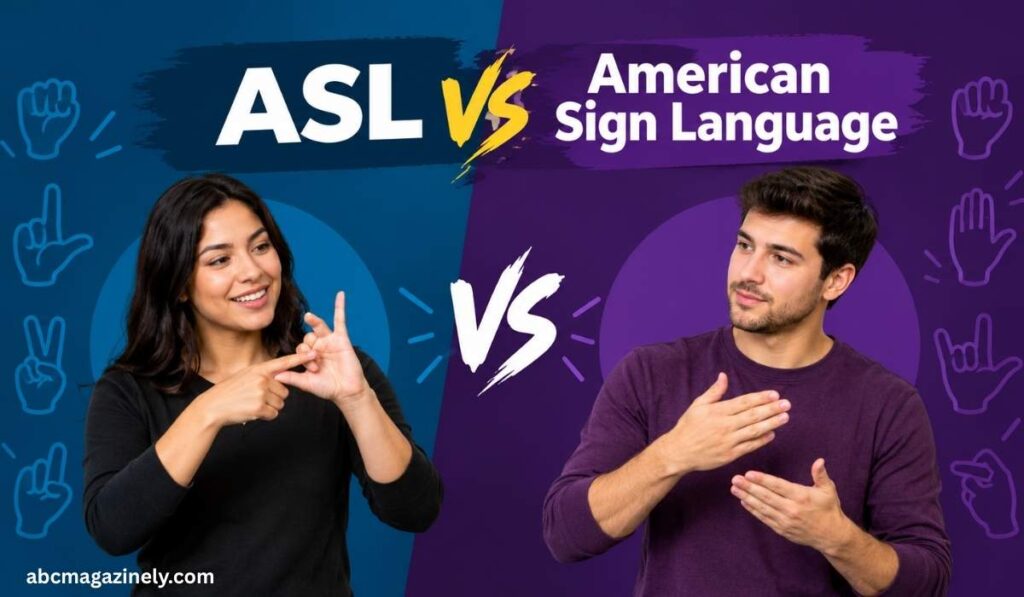
American Sign Language is a full visual language. Many Deaf people in the United States and parts of Canada use it. It has its own grammar. It uses hand shapes, facial expressions, and body movement.
It is a core part of Deaf culture and the ASL community. Many schools, colleges, and community centers offer an ASL class. People also pick up ASL language learning through apps and videos. An ASL interpreter helps Deaf and hearing people communicate in places like hospitals, courts, and events.
In professional communication, ASL nearly always means American Sign Language. “Please book an ASL interpreter” is a normal work email. Asking a coworker for their age, sex, and location would feel out of place. It could also break workplace rules.
You may also wonder about ASL vs A/S/L. The slashes in A/S/L make the chat meaning clearer. Plain ASL causes more mix-ups.
Common Mistakes and Misunderstandings
People trip over ASL in a few ways. Here are the most common ones.
- Assuming it means sign language. In a stranger’s DM, it rarely does.
- Answering with full details. You do not owe anyone your exact location.
- Reading “as hell” as a question. “Funny asl” is not asking for your age.
- Using it at work. Slang can confuse or offend.
- Ignoring context. The platform, the sender, and the sentence all matter.
These ASL common misunderstandings are easy to avoid. Pause and read the whole message first.
Is ASL Still Used? Is It Rude?
Yes, ASL is still used, but less than before. The “age, sex, location” question has faded on modern platforms. The “as hell” meaning is now more common in everyday slang.
Is ASL rude? Not always. It can feel pushy, especially from a stranger. It can feel worse if you are a teen. A friend joking around is different from an unknown account asking for personal data.
Another point: the old phrase assumes two options for gender. Some people find that narrow. Good online conversation etiquette means asking in a kinder way.
ASL Privacy Concerns and Personal Boundaries
Personal information online adds up fast. Your age and city seem harmless. Combined with a photo, a school name, or a username, they can reveal a lot.
That is why age and location questions deserve care. These are real ASL privacy concerns, especially for young users. Parents and teachers can use this topic to talk about online privacy.
Setting personal boundaries online is simple. Say no politely. Share less than you are asked. Block anyone who keeps pushing. Real friends will not mind.
Related Phrases and Internet Abbreviations
ASL sits among many casual texting abbreviations. Here are a few you will meet often.
- IRL means “in real life.”
- DM means “direct message.”
- AFK means “away from keyboard.”
- BRB means “be right back.”
Some are modern internet slang. Others, like ASL and BRB, are older. Knowing the difference helps you read internet chat culture with confidence.
FAQ
What is ASL in text on Snapchat?
It can mean age, sex, location from a stranger. It can also mean “as hell” from a friend. Look at who sent it and what comes before it.
Does ASL mean “as hell”?
Yes, in modern slang. It makes a word stronger, like “tall asl.” It does not ask for personal information.
Is ASL the same as A/S/L?
They share the same chat meaning. The slashes only make the letters easier to read. Plain ASL is more likely to be confused with American Sign Language.
Should I answer if a stranger asks ASL?
You do not have to. Protect your personal information. A short, polite no works well. If the person keeps pushing, block them.
Why do some people still ask ASL?
Habit, nostalgia, or a quick way to start talking. Some use it as a joke. Others use it to learn about strangers.
Can I use ASL when I mean sign language?
Yes. Just give it context. “ASL class” or “ASL interpreter” makes the meaning clear right away.
Conclusion
Now you know what is ASL in text and why it can confuse people. It can mean age, sex, location, “as hell,” or American Sign Language. The sentence around it tells you which one is meant. The classic question started in early chat rooms and still appears in DMs.
Here is one simple takeaway. When a stranger asks “asl?”, you do not need to answer. Keep your details private, reply with care, and trust your gut.

Noah is a passionate content writer and language enthusiast who enjoys making difficult words, phrases, and text meanings easy to understand. He creates clear, simple, and useful articles with practical examples to help readers improve their vocabulary and everyday language skills.