
You get a message that says “HML.” Now you wonder what it means. The HML meaning in text is usually “hit my line,” which means “call me” or “text me.” Sometimes it means “hate my life,” a joke about a bad day. Context decides which one fits. This guide explains both meanings, shows easy examples, and helps you reply with confidence. You will also see how people use it on Snapchat, Instagram, and WhatsApp.
What Does HML Mean in Text? Quick Answer
HML stands for “hit my line” or “hate my life.” In a private chat, “hit my line” is the one you will see most. It means “call me” or “text me.” “Hate my life” is a joke people use when something annoys them. Both are casual slang that fits friendly chats. Together, they cover most of what you will see online.
The Two Main Meanings in Simple Words
HML is a short way to type a longer phrase. People use it to save time. It has two common meanings.
Hit my line means “contact me.” The word “hit” means to reach out. The word “line” points to a phone line. Put together, the phrase asks someone to call or message you. A simple HML definition in texting is “get in touch with me.” This is also the most common HML meaning in texting.
Hate my life is a mood. People use it when they feel annoyed, tired, or embarrassed. Most of the time, it is a joke and not a deep statement.
Those two ideas cover almost every HML meaning in text you will meet.
Part of Speech and Grammar
HML is an acronym. Each letter stands for a word. The HML acronym meaning stays the same in capital or small letters. In chats, it works like a short phrase, not a single word. As an abbreviation, it has no strict grammar rules.
“Hit my line” acts like a command. It asks the other person to do something. For example, “HML when you get home.”
“Hate my life” acts like a feeling. People type it alone, as a hashtag, or inside a sentence. For example, “I have a double shift and I really HML.”
Grammar does not decide the answer. The HML meaning in text depends on the chat, not on the letters alone.
Where HML Comes From
Both versions began online.
“Hate my life” appeared in the 2000s. It started as a gloomy partner to “love my life,” or LML. It is also a softer cousin of FML. Urban Dictionary listed it by 2006. It showed up on Twitter by 2008. Later, it spread as a hashtag in the 2010s.
“Hit my line” comes from an older way to ask for a phone call. Dictionary sources link it to Black slang. The short form HML was recorded by 2010. Over time, people also used it for texts and direct messages.
These dates come from dictionary records. They show when people wrote the term down. They do not prove who said it first.
Read More: ISTG Meaning in Text: What It Stands For and How to Use It
HML Meaning on Social Media: Snapchat, Instagram, and WhatsApp
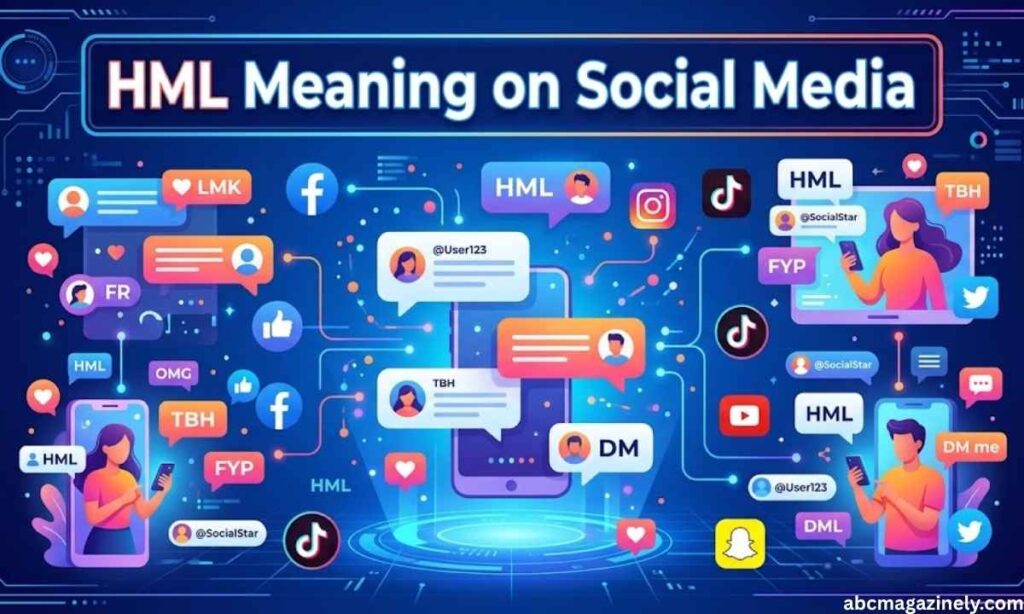
People often ask, “what does HML mean in texting apps?” Apps change the feel of the message more than the meaning.
The HML meaning on Snapchat is usually “hit my line.” A friend may type it in a chat to say “message me.” The HML meaning in Snapchat captions can flip to “hate my life” when a snap shows a funny struggle.
The HML meaning on Instagram works in a similar way. In DMs, it often asks for a reply or a call. Under a post, it may be a joke about a rough day. In an Instagram chat, “hit my line” is the likelier pick.
The HML meaning in WhatsApp follows the same split. A direct chat points to “hit my line.” A funny complaint in a group chat points to “hate my life.”
The HML meaning in messages is easier to guess when the chat is one on one. In every app, the HML meaning in text stays the same.
HML Meaning From a Guy or a Girl
The letters mean the same thing no matter who sends them. The HML meaning in chat is clearer when you read the whole thread. Tone is what changes.
The HML meaning from a guy is often casual. It may be a friend asking you to call. It can also be a hint if the two of you flirt.
The HML meaning from a girl works the same way. She may want a quick talk. She may also be sharing a bad day.
Check the clues. Look at past messages, emojis, and how well you know the person. The HML text meaning gets clearer with those hints. If you feel unsure, ask a simple question. “Do you mean call or text?” keeps things friendly.
How to Use HML in a Text
Here is how to use HML in a text the easy way.
- Pick your meaning first. Do you want a call, or are you just venting?
- Add a clear detail. A time or a reason helps.
- Match the mood. Use a warm tone for “hit my line.” Use humor for “hate my life.”
- Place it at the end. A short HML after your message is easy to read.
HML Examples in Texting
These HML examples in texting show both meanings. Each line makes the HML meaning in text easy to spot.
Hit my line:
- “HML when you land.”
- “I’m free after six. HML.”
- “Need the notes? HML and I’ll send them.”
Hate my life:
- “Missed the bus again. HML.”
- “My phone died in the middle of the game. I HML.”
- “Homework is due tomorrow and I have not started. HML.”
Here is a short chat:
Mia: “HML after practice.”
Sam: “Sure. Calling you at five.”
You can copy any of these HML slang examples for your own chats.
HML Reply Meaning: How to Answer It
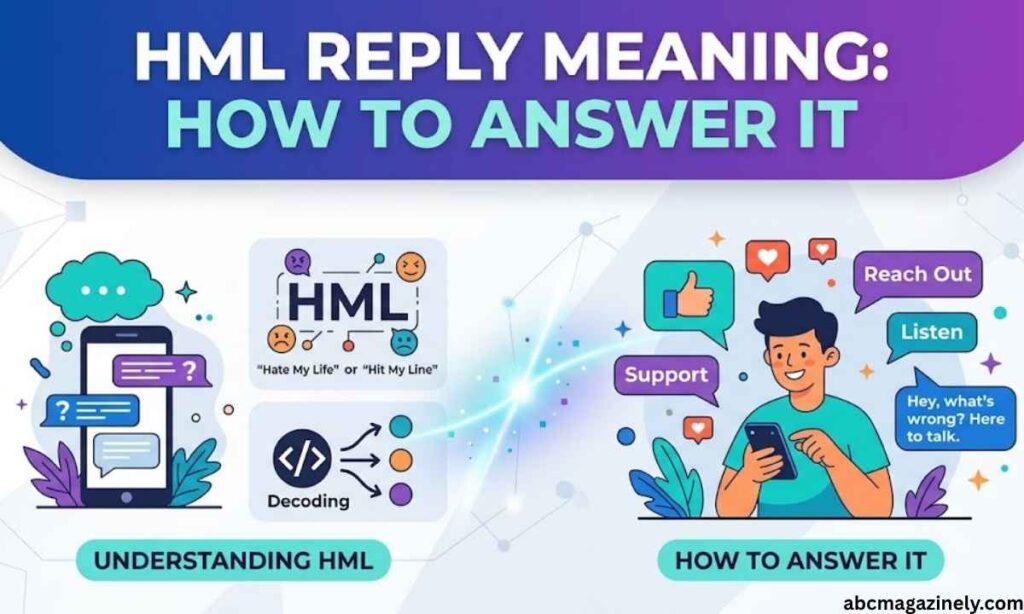
Your reply depends on what the sender wants. That is the real HML reply meaning.
If it means “hit my line,” try one of these:
- “Calling you now.”
- “Can’t talk yet. Text me?”
- “Give me ten minutes, then I’ll call.”
If it means “hate my life,” try one of these:
- “Oh no. What happened?”
- “Same, honestly.”
- “Want to talk about it?”
If the message sounds serious, skip the jokes. Ask how the person feels and listen.
Similar Slang and Opposites
Slang often comes in groups. Knowing the HML slang meaning is easier when you see its close matches and opposites.
| HML meaning | Similar phrases | Opposite |
| Hit my line | call me, text me, DM me, hit me up | leave me alone |
| Hate my life | ugh, I’m so done, FML (stronger) | LML (love my life) |
Related Phrases and Common Texting Abbreviations
HML belongs to a big family of texting slang meanings. Here are close relatives and other common texting abbreviations you may see nearby.
- HMU: hit me up. It also asks someone to reach out.
- LML: love my life. It is the happy opposite.
- FML: a stronger form of “hate my life.”
- TTYL: talk to you later.
- IDK: I don’t know.
- BRB: be right back.
People call HML internet slang because it began online. It is also HML text slang, since it lives mostly in chats and DMs. Anyone who looks up HML meaning slang will often find both answers, and both are right.
Common Mistakes
The biggest mistake is guessing the HML meaning in text without checking the chat. Here are other slips to avoid.
- Mixing up the meanings. Reading “hate my life” as “call me” causes confusion. The meaning of HML in chat shifts with the mood of the message.
- Thinking “hit” means harm. In “hit my line,” the word means reach out. It has nothing to do with violence.
- Assuming it is flirty. Many senders are just friends. Look for more clues before you read romance into it.
- Using it in formal messages. Teachers, bosses, and clients may not know the slang.
FAQs
What does HML stand for?
HML stands for “hit my line” or “hate my life.” The HML full form in chat depends on context. “Hit my line” asks for a call or message. “Hate my life” shares a bad mood.
Is HML a rude word?
No. It is mild slang. It is not a swear word. In fact, it is a softer way to say a stronger phrase like FML.
Is HML the same as HMU?
Not exactly. HMU means “hit me up,” and it matches “hit my line.” But HML can also mean “hate my life,” and HMU cannot.
Why do people say HML instead of “call me”?
It is faster to type. It also sounds relaxed. Many people like short slang in quick chats.
Should I type HML in capital letters?
You can use either style. Capital letters are more common. Small letters look fine in casual chats.
Conclusion
The HML meaning in text is simple once you know the two paths. “Hit my line” means call or message me. “Hate my life” shares a rough mood. Check the chat, the tone, and the sender before you answer. When in doubt, ask a quick question. Now you can read HML with confidence and reply in a way that fits.

Noah is a passionate content writer and language enthusiast who enjoys making difficult words, phrases, and text meanings easy to understand. He creates clear, simple, and useful articles with practical examples to help readers improve their vocabulary and everyday language skills.